

Private bag, Malua Theological College, Apia, SAMOA
+685 42303
mtc@malua.edu.ws

ABOUT US

History

.On the 24th September 1844, Rev. George Turner and Rev. Charles Hardie of the London Missionary Society founded Malua Theological College. “For Jesus and His Church” became the vision of the College that continues today, a statement that encapsulates the intrinsic and unchanging nature of the College..

Discussions concerning the establishment of the College began in 1840 when the need for an educational institution that would provide educated ministers became evident. But it was not until February 1844 that a formal agreement was reached to establish such an institution. In September of the same year, the College was officially founded. According to Turner, the College was established for the sole purpose of providing an educated minister for each congregation in Samoa and in other island communities of the Pacific.

A permanent site for the College was secured in the district of Saleimoa in an area known as Maluapapa or Malua, as it is now commonly called, situated approximately twelve miles west of the capital of Apia and about the same distance east of Faleolo International Airport.

The College offered its first courses on September 25, 1844, with twenty-five students, all single males aged between twelve and twenty-four years, attending. In 1846, married students and their wives were admitted to the College, and from then on, the education of student’s wives became an integral part of the College’s programme.

The admission to the College of students from other Pacific islands such as Vanuatu, Niue, the Loyalty Islands, and New Caledonia within ten years of its founding was another very significant development. Writing in 1869, Turner pointed out that after only twenty-five years since its beginning, about 1143 graduates, Samoans and other Pacific islanders had gone from the College to serve in the mission fields in Samoa and elsewhere, providing clear evidence that the College was in fact fulfilling the primary purpose for which it was established.
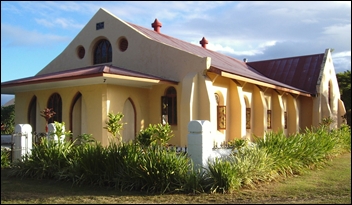
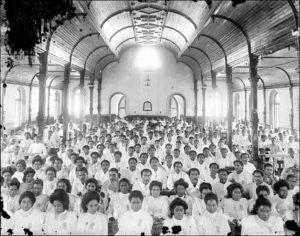
The Fale Iupeli (Jubilee  Hall), built to commemorate the College’s 50th anniversary was officially opened in 1897. This monumental building became a permanent and notable feature of the College campus. However, after 110 or more years of service to the College and the CCCS, the building was dismantled in 2013, after the General Assembly’s Resolution to build the new church building (O le Fale Iupeli). Noteworthy also is the Fale Senetenari (Centenary Hall), which was built to mark the 1944 celebration of the College’s one hundred years. It still continues to cater for the College other activities. In November 2014, the College dedicated its larger Chapel, now known as Iupeli II, which was constructed with, and using, most materials from the first Fale Iupeli.

The Iupeli II, large enough to accommodate MTC community, is the contemporary centre of community worship. During the first week of the 2017 General Assembly, the grand splendid new Fale Iupeli was officially dedicated. MTC uses it for its Graduations and other services from time to time

Wide interest in the formation of a Pacific Conference of Churches (PCC) led to a meeting held in the College in 1961 of various church leaders from around the Pacific region. In this meeting an initial agreement was reached not only in respect of the formation of the Pacific Conference of Churches, but also in respect of the establishment of a regional theological institution.

The Pacific Theological College (PTC), opened in Fiji in 1966, has had a close relationship with the Malua Theological College since then, mainly through College graduates who have graduated from the PTC with either a Bachelor of Divinity or a Master of Theology and have become lecturers at the College since 1969.

The academic standard of the College is reported to have been significantly raised by Dr. John Bradshaw when he was principal of the College from 1956 to 1963. Dr. Bradshaw not only introduced new subjects such as Psychology, Pastoral Counselling, Homiletics and Greek into the curriculum, but he also made English the teaching language for all subjects. Dr. Bradshaw’s efforts to upgrade the academic standard of the College further led him to prepare a number of students to acquire their Certificates of ‘Proficiency in Religious Knowledge’ from London University.

Rev. David Bowen, principal from 1964 to 1967, took the academic development of the College even further when he introduced Hebrew and Systematic Theology in the curriculum. In the effort to improve the College library, Rev. David Bowen was able to obtain from the Theological Education Fund (TEF) a number of books, which added significantly to the collection. His wife, Gerda, in 1964 founded the first of such early childhood institution in Samoa.

Upon the expiry of Rev. David Bowen’s term of office, the administration of the College was handed over to Samoan ministers who also were College graduates. The significance of this change of leadership for the Samoan people was profound. The change of leadership in 1967 was a signal that the College had come of age. Rev. Mila Sapolu was the first Samoan Principal of the College.

On the 24th of September 1994, the Congregational Christian Church Samoa commemorated with pride and thanksgiving one hundred and fifty years since the founding of the College. Reflecting on the events of the commemoration, a former
student of the College observed that the celebration ended with a clear
affirmation of the importance of theological education in Samoa, and the greater role that the College would play in it.

Indeed the essential nature of the College as inscribed in its vision shall remain, ‘For Jesus and His Church’, and there must be a continuing commitment to the progressive development of its academic programme as well.

By resolution of the General Assembly of the Church in May 1996, the proposal for the degree programme was given formal approval. The implementation of this programme became the responsibility of Rev. Prof. Otele Perelini. After extensive planning and organisation, the degree programme began in 1997.

The General Assembly of the Church in 2016 passed another important motion to teach in Malua the Master of Theology degree programme. It was the task of the Principal and Staff of Malua to prepare and implement that degree programme. In August 2021, Rev. Dr. Vaitusi Nofoaiga put forward to the Board of Malua a proposal of the structure, plan, and implementation of the Master of Theology programme to begin in 2022 and was accepted.

Another milestone for Malua Theological College is the start of the Doctor of Philosophy Programme this year, 2026. The Malua Board presented this motion to the General Assembly in 2025, and it was accepted.

By the authority of the General Assembly of the Congregational Christian Church Samoa, the College is empowered to award diplomas and confer degrees as follows:

Diploma of Theology

Bachelor of Theology

Bachelor of Divinity with Honours

Master of Theology

Doctor of Philosophy

The Degree Programme: A Historic Moment

The formal beginning of the degree programme in February 1997 was indeed a very important moment in the history and academic life of the College. The event thus warrants special notice.As the realisation of a vision, the inception of the degree programme represented the culmination of years of planning and organisation. In the respect that the event marked the final phase in the transformation of the College into a tertiary institution, the beginning of the degree programme thereby accentuated the ability of the College to develop its institutional objectives and to widen its academic horizons.

In a subtle yet practical way, the beginning of this new venture impressed upon everyone involved with its implementation the enormityof the task. As a huge educational undertaking, the continuation of the new venture will no doubt command from the Church, members of the Faculty and students of the College a commitment commensurate with the nature of the undertaking. In short, it will require commitment of the highest order.

Thus, the introduction of a higher and more flexible academic programme commenced in 1997. Gone are the days when College students were confronted with a range of compulsory courses in their four years of study towards the Diploma of Theology award. In addition to the opportunity to undertake degree courses, students now also enjoy a wide choice of courses in the second, third, and the fourth years of the degree programme.

The optional or elective papers offered under the degree programme span a wide range of courses from the immediately practical through to more philosophical papers. But while the degree programme offers a wide choice of courses and considerable opportunity for specialisation, the College degrees and the Diploma of Theology award continue to place strong emphasis on the development of basic practicalskillsrelevant to and necessary for the Church’s pastoral ministry.

The development of sound interpretative, analytical and reasoning skills is therefore the primary focus of the compulsory ‘block’ of core courses taught in the four years, especially in the first year. In the remaining three years, other practical skills are developed through compulsory programmes in preaching or ‘Sermon Class’ in the second year and Field Work in the third. The latter programme is designed to give all third year students the essential practical experience of working in a local Church congregation.

So while the academic programme is now much more flexible and students have much greater opportunity to tailor their courses to meet their own particular interests, the traditional practical orientation of the coursesthat the College offershas not been undermined rather it has been greatly enhanced.

Notwithstanding the joy and excitement that the inception of the new venture has generated, it must be stated that, as a critical moment of transition and change, the beginning of the degree programme has been fraught with ambivalence. In short, as with all new beginnings, this new beginning entails both hope and challenges for the future.

It is our fervent hope that the members of the Faculty will continue to entertain the resolve to maintain and further develop the existing degree programme. In that ongoing process of development, changes in the structure and composition of the degree courses might have to be made from time to time. Whereas such changes (albeit minor) might be inevitable, they would neither entail any change in the College’s underlying philosophy (referred to above), nor cause any change to the College’s commitment to the development of basic practical skills that are necessary for the Church’s pastoral ministry.

It is also our prayer that the degree programme will be spared from the effects of the chronic funding problems which now afflict many tertiary institutions. Being assured of the Church’s continuing moral and financial support of the College’sactivities is, however, a comforting thought. In this connection, the College wishes to register its gratitude for the invaluable support which is critical for thesmooth operation and progress of the Church’s theological institution.

The calibre and enthusiasm of students currently enrolled in the three degree programmes is an important consideration in this respect. It is indeed the College’s good fortune to have students of outstanding ability at the outset of its degree programme. No doubt, they will be competent holders of the College degrees.

The inclusion of College graduates (the majority of whom are parish ministers) is a very important phase in the development of the degree programme. This category of students will obviously add maturity and experience to the programme, providing challenging and stimulating views to the discussions and seminars.

The end of 1999 witnessed the first graduation of Malua Students with degrees (Bachelor of Divinity & Bachelor of Theology), a historic moment in the history of Malua Theological College. During the same graduation service, then Principal, Rev. Dr Otele Perelini was awarded the first Church Professorship of the College, another historic moment in the life of the College. The retirement of Professor Perelini marked ten years since the College began conferring its degrees.

As in any on-going venture of this kind, there is always the challenge to maintain its momentum and adapt to the changing circumstances. This need was encountered in 2010 when the erstwhile Principal, Rev. Dr. Afereti Uili, set in motion a major review of the College’s academic programmes.

As the result of the review undertaken, Rev. Ma’afala Limā – who became Principal of the College in 2015 – was determined to adapt Malua to the changing circumstances in terms of the quality assurance of its programmes without losing sight of the core values upon which the College was established.

Hence, the inception of the alignment of the College’s programmes to the new accreditation standards set by the South Pacific Association of Theological Schools (SPATS) and the registration and accreditation of the College’s programmes under the Samoa Qualification Authority (SQA) as per law of the land.

A further historical development in the life of the College in 2024, included the conferment of Professor of New Testament Studies to the current Principal of the college, Rev. Dr. Vaitusi Nofoaiga. The appointment by the Board of Malua and the CCCS General Assembly, included a Conferring Ceremony during the 2024 CCCS General Assembly, with special acknowledgements of the appointment by Professor Paul Trebilco of the University of Otago, and the retired and former Principal of Malua Rev. Prof Otele Perelini.

Rev. Prof. Vaitusi Nofoaiga – the current Principal and Accreditation Commissioner of SPATS – continues the work done by the previous Principals. He is now responsible to lead the Master of Theology degree programme that began in 2022 and the Doctor of Philosophy Programme that begins in 2026.

Principals of the College (Since 1941)

Revd. Edwards

1941 – 1948, 1950 – 1952

Revd. White

1949

Revd. Hoadley

1953 – 1955

Revd. Dr. John Bradshaw

1956 – 1963

Revd. David Bowen

1964 – 1967

Revd. Mila Sapolu

1967 – 1971

Revd. Bert Williams

1972 – 1976

Revd. Masalosalo Sopoaga

1976 – 1979

Revd. Oka Fauolo

1979 – 1994

Revd. Professor Otele Perelini

1995 – 2010

Revd. Dr. Afereti S. Uili

2010 – 2015

Revd. Ma’afala Limā

2015 – 2021

Revd. Prof. Vaitusi Nofoaiga

2021 –

Board of Malua

This is the Executive and Advisory Body which oversees the management of MTC.  As a sub-Committee of the Elders’ Committee, the Board is thus under the authority of and accountable to the former, but with some degree of independent responsibility for the running of the College.

The functions of the Board include:

The implementation of all matters which, in its opinion, are conducive to and necessary for the development of the College; and

  • The appointment of the Vice-Principal of the College; and

  • The selection and appointment, or, if required the termination of the employment of lecturers of the College; and

  • The preparation of the annual budget for the College for submission to the Elders’ Committee for confirmation and presentation to the Finance Committee for action; and

  • In cases of urgent or unforeseen College financial requirements, the Board has the authority to refer them directly to the Finance Committee for appropriate action; and

  • The preparation and submission of reports on the Board’s own work to the Elders’ Committee, and through the latter to the General Assembly.

Membership of the Board includes the Officers of the Elders’ Committee, all members of the Ministerial sub-Committee (a sub-committee of the preceding body), the Officers of the CCCS General Assembly and the Principal of the College.


Rev. Asotasi Gu Time FT

Chairman of the Board

Apia i Sasa’e

Rev. Amuia Seuala FT

Secretary of the Board

Itū o Tane

Rev. Enefatu Lesa FT

CCCS Chairman of the General Assembly

Rev. Palemia Tauiliili FT

CCCS Vice Chairman of the General Assembly

Rev. Saitumua Tafaoialii FT              

Amerika

Rev. Fuamaila Soa FT

Hawaii

Rev. Iakopo Leleimalefaga FT

Niusauelese

Rev. Simeona Taefu FT

Niusauelese i Sisifo

Rev. Aviti Etuale FT

Vitoria

Rev. Tauaaga Mataafa FT

Kuiniselani i Saute

Rev. Lauie Lupematesila FT

Kuiniselani

Rev. Faleulu Malaulau FT

        BTh (MTC)

Niu Sila i Saute

Rev. Vaegaau Liko FT

        BTh (MTC)

Laumua o Aotearoa

Rev. Anatu Reupena FT

        BD (MTC)

Manukau

Rev. Pouniu Faamausili FT

Aukilani

Rev. Tunumoso Iosia FT

Falealili/ Siumu/ Safata

Rev. Pati Vili FT

        BTh (MTC)

Lotofaga/ Lepā/ Aleipata

Rev. Aila Patea FT

        BTh (MTC)

Vaimauga

Rev. Auva’a Peseta FT

Apia

Rev. Misipalauni Faatau FT

Faleata

Rev. Fili Matalavea FT

Malua

Rev. Taise Ioapo FT

A’ana

Rev. Leaso Tupa’i FT

Fa’asaleleaga

Rev. Dr. Taipisia Leilua

        BD, MTh (PTC), DTh (MCD)

CCCS General Secretary

Rev. Melepone Isara

          BA (USP), BD (MTC),
          MTh Distinction (PTC)          

CCCS Treasurer

Rev. Prof. Dr. Vaitusi Nofoaiga

          BA (Victoria), BD (MTC), MTh Hons,
          PhD (Auckland)

Principal of Malua Theological College

STUDENTS

YEAR ONE

   
 STUDENTSWIVES
1Alfonzo Malo Na’otala 
2Atimalala OlaBeverly BArg
3Bonhoffer Fotuaava Sakiasi BEd  Lanuola
4Cyrus Moamoa Liu 
5Elia Paese BAPunipuao BCom 
6Esera Peniamina Finauga BEdBeth
7Faasisila Palale BCom  
8Herman R. Enosa 
9Iakopo IakopoLisati
10Ioritana Tusa SoifuaTinamoni
11Lemi Suisala 
12Laauli Pulu   
13Lui Seumaalataua 
14Martys Motuga Matagi BCom 
15Max Lia’i Poufa 
16Misipati Kome 
17Musu AuavaEaster BCom
18Obert Amasone Tuisuga BAudio   Siupolu
19Peinitino Anoai KeresomaMargaret
20Pelesara Pelesara BBusMadonna BBus
21Punaotala Iakopo BScTuituivao
22Salamo Tuifao 
23Seunuu Leleimalefaga Mau          Levei Riana
24Shalom Alatina 
25Sue Masalosalo TalaeseMelisha Talaese
26Taeoiatua Tuiavii 
27Taua Lauina Taua 
28Tavete Muavae Leifi 
29Tootai AllenDoreen
30Vaipanoa MalagaTafaoata

YEAR TWO

BACHELOR OF DIVINITY WITH HONOURS
STUDENTS WIVES
1 Afele Fereti PGradSS Lotofaga BSc
2 Iosefa Fili Tiliga BEd
3 Kevin Asotasi BCom
4 Luagia Semau BEd Tineleti BA
5 Marshall Maua MPAcct Jacinta MHR
6 Talalelei Solomona BSS      Jasmine BEd
BACHELOR OF THEOLOGY
STUDENTS WIVES
7 Junior Amituanai
8 Kuresa Faaeteete Matauaina BCom
9 Lawrence Sio 
10 Mark Leuluaialii Diana
11 Tagataoletuiatua Vaipua
DIPLOMA OF THEOLOGY
STUDENTS WIVES
12 Aleni Uelese Faamanuiaga
13 Avei Avei Talosaga
14 Christopher Lealiifano
15 Fitu Fuimaono BCom Merelina Dora
16 Gasolo Salima Tusiupu
17 Jake Ropati
18 Joshua Milford BContempMus
19 Kupa Avaia BN So’o
20 Latai Iakopo Nanai
21 Sadat Peteru Shanelle
22 Shalom Timu  
23 Ulimasao Fata Siokapesi

YEAR THREE


BACHELOR OF DIVINITY WITH HONOURS


STUDENTS

WIVES

1

Christian Peleseuma Mose BCompSc


2

Eurnik Nicholas Lee Hang BCom


3

Iakopo Leleimalefaga BN

Elsie

4

Nepo Mani Nepo BA

Lisabella BA

5

Siaituvao Talataina BA

Theresa

6

Steve Ale BMus

Nancy


BACHELOR OF THEOLOGY


STUDENTS

WIVES

7

Chesedh Lafi Tiatia


8

Ioane Lemo

Faga Vili

9

Lole Pokati Tiumalu

Tovale

10

Lynn Enesa Talalelei

Charity

11

Misionare Nepo

Rose

12

Molesi Jr. Sagapolutele

Marlena

13

Ponepi Tolua

Taele

14

Reupena Itereamu


15

Seth Peniata

Nerisa

16

Taeia Penitusi **


17

Talalelei Atalaga Nanai


18

Tavita Papalii

Faamini

19

Tealofi Peleti**


20

Wesley Liaina


DIPLOMA OF THEOLOGY


STUDENT

WIFE

21

Sakalia Sakaio*

Fiailoa

 *Scholarship student from Ekalesia Fa’apotopotoga Kelisiano Tokelau

**Scholarship students from Ekalesia Kelisiano Tuvalu

YEAR FOUR


BACHELOR OF DIVINITY WITH HONOURS


STUDENTS

WIVES

1

Eseneiaso Walter Fanolua BCom


2

Faiāuga Aloaina BSc

Siai

3

Fatutolo Tuisuga BSc

Nellie

4

Juergen Faamau BE


5

Misela Leuluniu BAgr

Lila

6

Raisedinland Iose BPerfomArts


7

Sosopo Mose Aiafi BN

Tepora

8

Toeupu Kaisara BA

Ioka


BACHELOR OF THEOLOGY


STUDENTS

WIVES

9

Amelika Tuimalatu

Eseta Saufua

10

Asiel Daniel Tautiepa


11

Clifton Gosta Sa’e

Ataotaulelei

12

Fereti Faifua


13

Galu Faamaoni*

Urima

14

Heti Leilua

Leofu’a

15

Iafeta Tafunaina

Puarava

16

Iefata Afatia Afualo

Malia

17

Kereta Toomata Faatonu

Kuini

18

Lafaele Rapi

Genevieve

19

Lasi Sooalo

Akenese

20

Leilua Faamate

Sofa’i

21

Makaili Matatia**


22

Malaetele Aiiloilo Uelese


23

Malau Alasa**


24

Mualia Chromatic Semitone

Elizabeth

25

Nomeneta Alapati

Manuia

26

Richard Taui**


27

Talaia Reginald Talaia

Ekrina

28

Tavita Arona

Maqmiraculous BEd

29

Tepaula Vaega**


30

Tuifao Masini

Misiotaota

31

William Maligi Finau

Tima

 *Scholarship students from Ekalesia Fa’apotopotoga Kelisiano Tokelau

**Scholarship student from Ekalesia Kelisiano Tuvalu

MASTER OF THEOLOGY


STUDENTS

WIVES

(One-Year Programme/ Final Year of the Two-Year Programme)

1

Rev. Sotiaka Risatisone Roma BTh

Vanu BN

2

Rev. Amosa Silipa DipTh

Mele

3

Rev. Aratibin Mikaere2 BDHons


4

Rev. Tieem Metari2 BD


5

Rev. Hemi Faaeafaleupolu BD

Mindy

6

Latu Afioga BD, PGDip, BA

Malua

7

Brian Anae BTh

Liuasi BA


STUDENTS

WIVES

(Two-Year Programme)

8

Afasene Falana’i BTh

Taufua

9

Lualua Manila BTh

Peata

10

Samuelu John Ah Sam BTh


11

Benjamin Tuia BTh

Ueligitone

12

Poao Jr. Seti Laufiso BTh

Tioatamanino

2Scholarship students Kiribati Uniting Church

DOCTOR OF PHILOSOPHY


PhD Candidates

WIVES

1

Rev. Victor Pouesi (FT) BD

Salome   

2

Rev. Laupama Solomona (FS) MTh Distinction, BTh

Vaitoomuli

3

Rev. Toosavaili Tua (FS) MTh, BTh

Epenesa

4

Rev. Loia Fiu (FS) MTh Distinction, BDHons, BArch

Easterakesa

5

Rev. Auatama Iese (FS) MTh, BTh

Loretta

6

Rev. Petero Taufau MCounselling, BD

Soaimaile

7

Rev. Keebwa Tira2 BD


8

Aperaamo Apelu MTh, BDHons, BArg

Lautasi BArg

9

Caesar Utufua MTh Distinction, BDHons, MstMariner

Norah

10

Misioka Nicolas Tanielu MTh Distinction,  BDHons, BSc

Rossana BA

11

Faafouina Jr. Samuelu1 BDHons, BA

Melanie

12

Galovale Vili Opelu1 BDHons, BCom

Punalei

1 Scholarship students EFKS/CCCS

2Scholarship student Kiribati Uniting Church

Student Association

All resident students and their wives are members of the MTC Student Association presided over by a President and a Secretary, elected annually by the Principal and members of the Faculty. The Association’s main objective is to build positive mutual relationships for the spiritual, academic and general welfare of its members. 

The student association provides an avenue for all students and wives to discuss and address issues for improvement on student welfare issues. It also provides social and leisure activities for the student body and community.

Accordingly, the Association through its officers can communicate at any time and make suggestions to the Principal and/or Faculty concerning the welfare and interests of the student body.